Teaching to promote a world without the death penalty
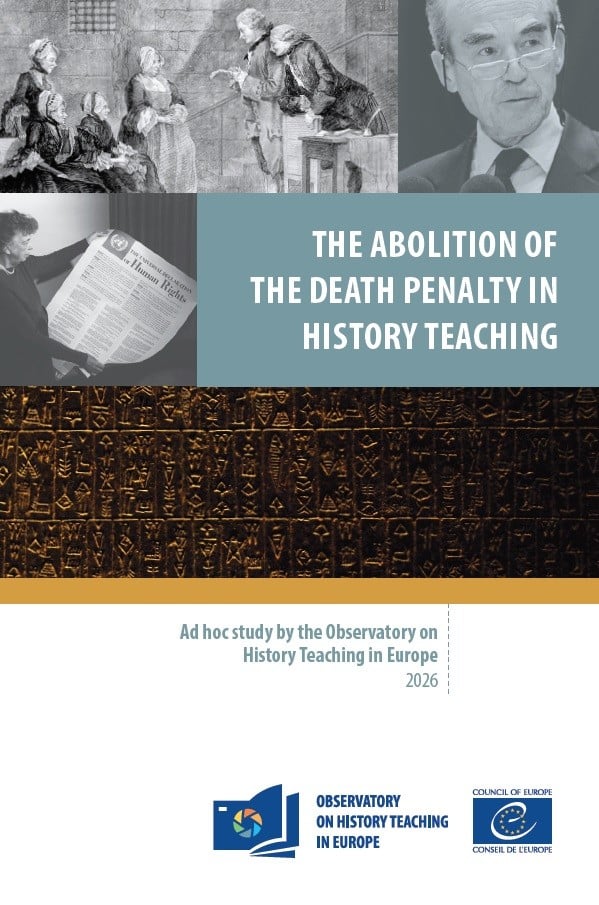
Ad hoc study by the Observatory on History Teaching in Europe 2026
The abolition of the death penalty in Europe is a recent and fragile achievement. For young generations who have grown up in countries where it is abolished, this achievement can feel self-evident. Yet, it was the outcome of deliberate struggle. Learning about the history behind the abolition movement is key to understanding that human rights can only be secured through sustained commitment over time.
The mission of the Observatory on History Teaching in Europe (OHTE) is to provide a clear picture of how history is taught in its member states. With contributions from the Leibniz Institute for Educational Media | Georg Eckert Institute (GEI), the Council of Europe Coordinator for the abolition of the death penalty and the International Academic Network for the Abolition of Capital Punishment (REPECAP), this ad hoc study looks at the portrayal of the death penalty and its abolition in history education in the OHTE member states.
In the context of the ongoing international movements for the abolition of the death penalty, particularly the efforts of the Council of Europe towards achieving a death penalty-free zone in Europe, this study demonstrates the essential role of history education in reinforcing learners’ appreciation of human dignity, justice and equality.
Foreword by the Secretary General of the Council of Europe Preamble – Towards global abolition Chapter 1 – Introduction
Background: the death penalty in Europe and arguments for and against its abolition
The role of the Council of Europe in the abolition movement
Learning about the abolition of the death penalty through history education
Key findings
Chapter 2 – Methodology
Curriculum analysis
Textbook analysis
Teachers’ feedback
Chapter 3 – Curricula Chapter 4 – Textbooks
Chronological presentations of the death penalty
Perspectives from legal history
Representations of the political purposes and instrumentalisation of the death penalty
People subjected to the death penalty
From criticism to abolition of the death penalty
Visual representations of the death penalty
Chapter 5 – Teachers’ feedback Chapter 6 – Concluding remarks References
Appendix 1 – List of analysed curricula
Appendix 2 – List of analysed textbooks
Appendix 3 – Number of teachers per member state who provided feedback on the topic
Contributors