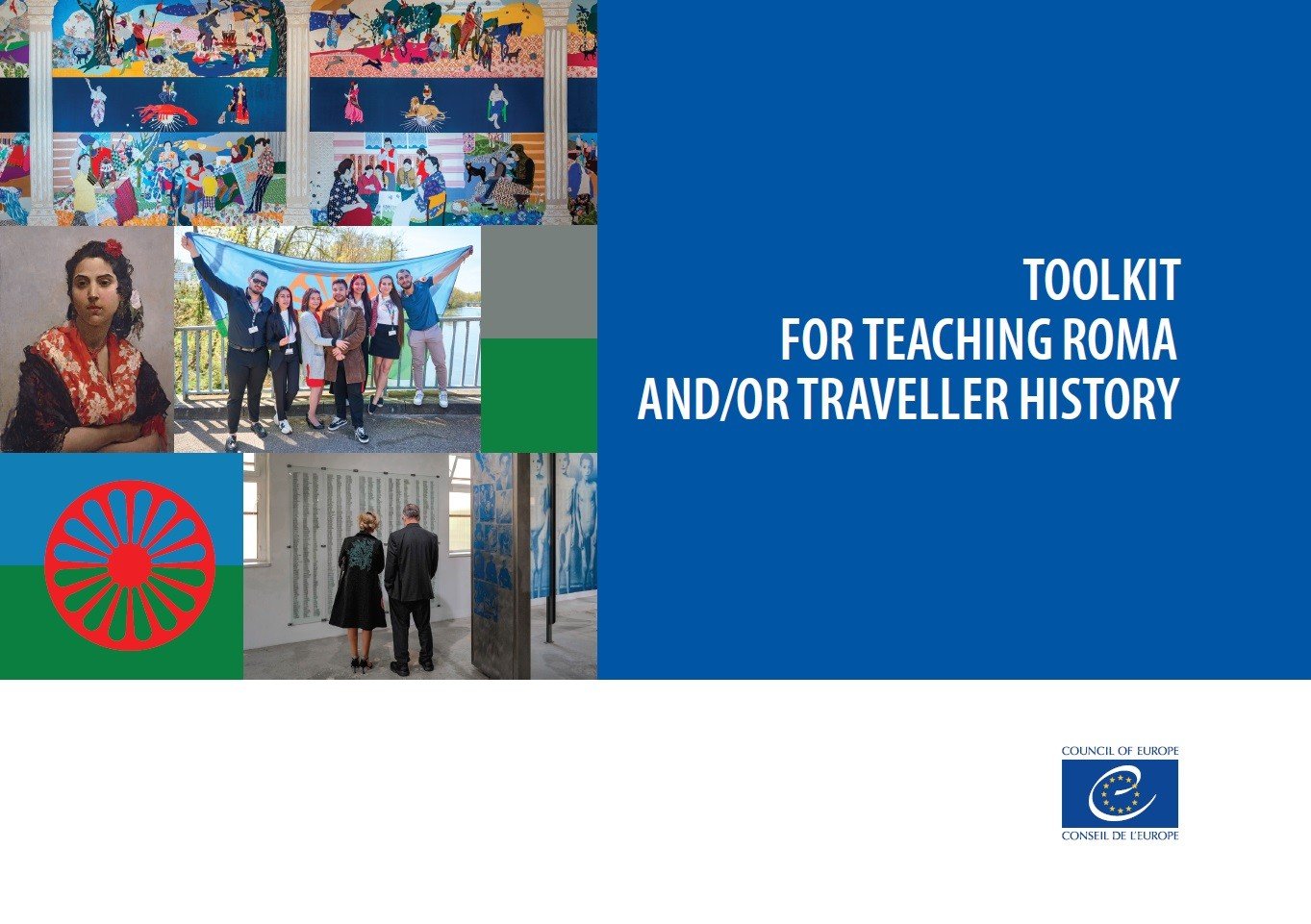
Tool 1The representation of Roma and/or Travellers in school curricula and teaching materials - Mapping study identifying good practices in Council of Europe member states
Introduction
Teaching of Roma and/or Traveller history and its inclusion in national school curricula and teaching materials
Teaching about the Roma Holocaust and other historical persecutions
Training activities
Extracurricular and research activities
Conclusions
Compilation of good practices on teaching Roma and/or Traveller history and culture that can be scaled up in member states
Appendix
Tool 2Recommendations for ensuring the full participation of Roma and Travellers in the process of developing school curricula and teaching materialsTool 3The history of Roma and Traveller communities. Historical briefings
How to use the historical briefings
1. History of Roma and Traveller communities in Europe
A short introduction to the Roma
Arrival in Europe
Middle Ages and modern history
Life under industrial capitalism
Travellers
2. Impact of Roma and Travellers on European culture and society
Roma and Travellers in pictorial art
“Gypsy” jazz and flamenco: Roma musical influences
From Time of the Gypsies (1988) to Peaky Blinders (2013): Roma and Travellers in theatre and films
3. The Roma and Travellers today: politics and strategies of resistance
Discrimination and persecution in the 20th century
Political developments and the present situation
4. Online resources on Roma and Traveller history
Archives and repositories with testimonies, biographies and photographs
Readings and videos to strengthen historical knowledge
Bibliographies and life stories
Anti-racist guidelines to prevent antigypsyism
Tool 4Using stories of the past to teach students about its complexity. Opre Roma: reflections on the Roma movement in the 1970s
1. The teaching strategy
Overview of the strategy
Aim of the strategy
2. The strategy in action
Step 1 – Preparing the materials and providing historical background information
Step 2 – Using the materials in the classrooms
Bibliography
Tool 5Teaching strategy: object biography. An early 20th-century vardo
1. Historical background of the vardo
2. Using the vardo for an object biography in the classroom
This object biography can be connected to the following curricular themes:
Activity understanding goals
Object biography timeline: the vardo
Key discussion points to draw out
A note for educators
Bibliography
References
Further reading
About the author
Tool 6Teaching about the Roma Holocaust and other historical persecutions of Roma and Travellers from a human rights perspective
Introduction
Structure of the handbook
Note on terminology
1. Pedagogical approach
2. Educational activities
Activity 1 – Roma history and antigypsyism
Activity 2 – Stereotypes and prejudices against Roma
Activity 3 – Persecutions of Roma and Travellers before the 20th century: England and Scotland
Activity 4 – Persecutions of Roma and Travellers before the 20th century: the Great Round-Up of the Roma in Spain
Activity 5 – Persecutions of Roma and Travellers before the 20th century: Roma slavery in Romanian Principalities
Activity 6 – The Roma Holocaust through the lens of human dignity
Activity 7 – Genocidal actions throughout Europe
Activity 8 – Teaching with testimonies
Activity 9 – Human rights and the Roma Holocaust
Activity 10 – Roma resistance
Activity 11 – Roma remembrance
Activity 12 – Roma after the Second World War
Activity 13 – Antigypsyism today
Resources for teachers
About the author